A look back at FOWT 2024
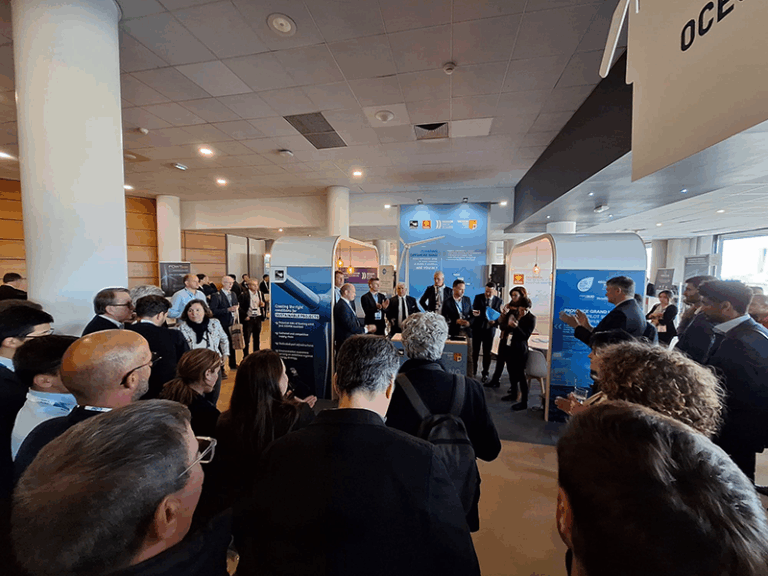
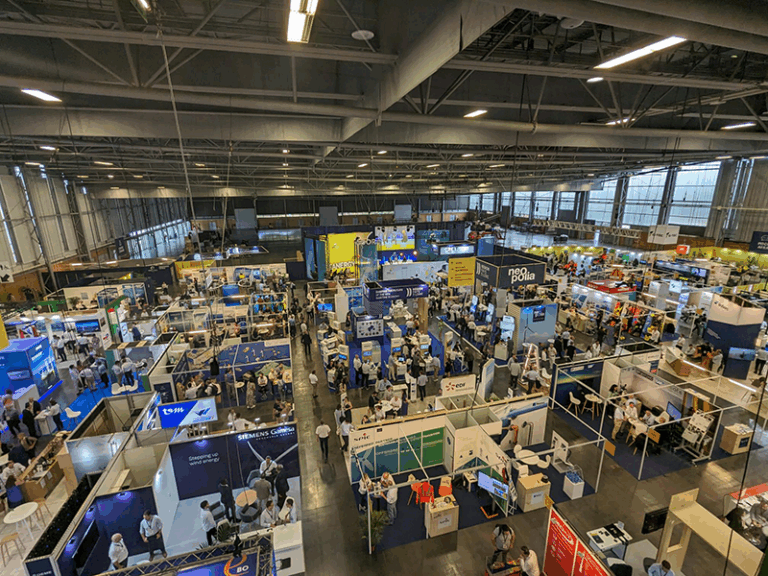
InnovationThe 2024 edition of FOWT in Marseille was a key milestone in the development and consolidation of the floating wind sector, which stands out for its considerable potential in the global energy transition. With more than 50 exhibitors participating, this event provided a platform for discussion and presentation of the latest advances in this rapidly expanding field.
Indeed, the floating wind sector, which allows turbines to be installed in deep waters where fixed foundations are not viable, is growing rapidly. According to forecasts by the International Energy Agency, floating wind could reach a capacity of 6 GW by 2030, subject to adequate political and financial support. FOWT addressed these prospects by focusing on innovations, technical and regulatory challenges, and potential solutions to overcome obstacles on an industrial scale.
The Pays de la Loire region at FOWT
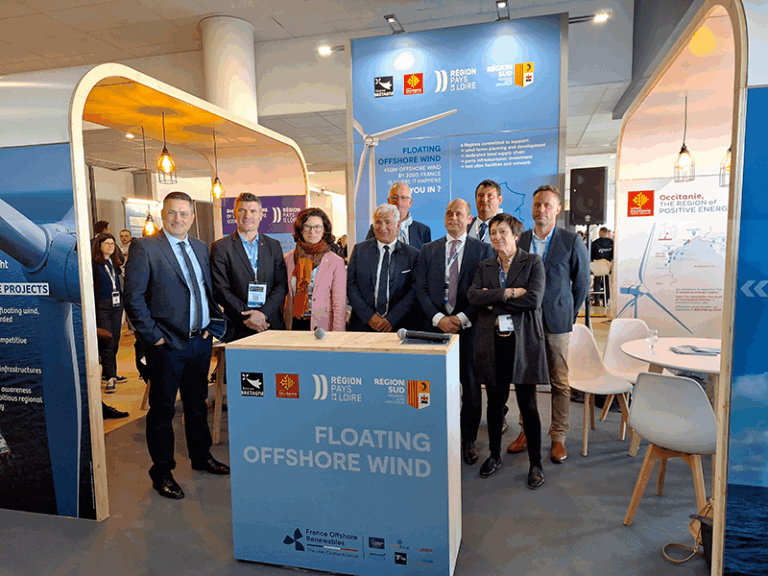
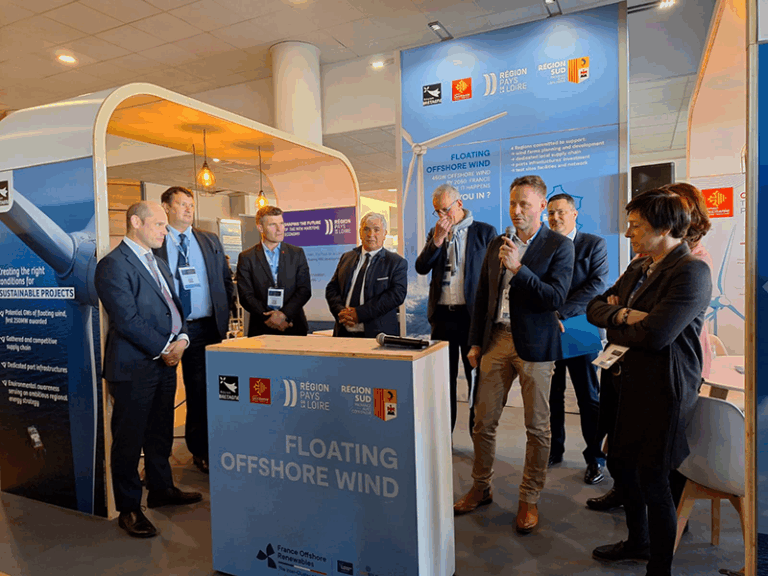
The Pays de la Loire region made a significant presence, illustrating its commitment to this technology. Claire Hugues, Vice President of the Region, highlighted the importance of floating wind power in the regional energy strategy. Local companies such as SCM Le Mans and NaRval Solutions presented their latest innovations, demonstrating the dynamism of the regional ecosystem in the sector.
FOWT, high-quality exchanges
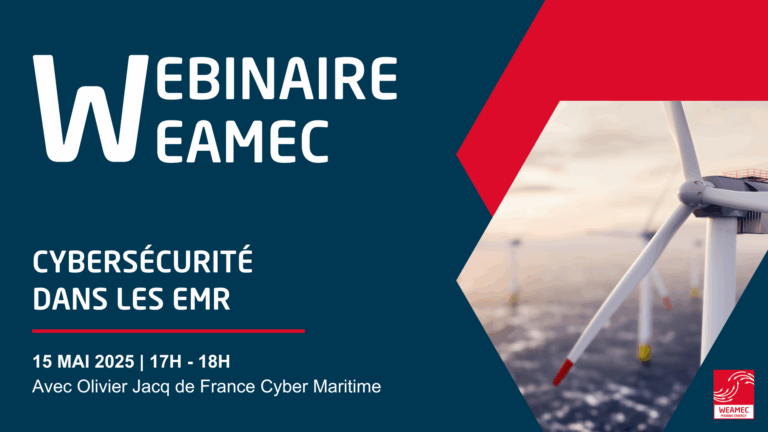
Renowned speakers such as Gro de Saint-Martin, Director of Strategy and Development at RTE, Grzegor Gorski, CEO of Ocean Winds, and Javier Garcia Perez, Director of International Affairs at Iberdrola, shared their views on market developments, technical challenges such as supply chain integration, cybersecurity (see webinar on this topic) in response to sovereignty concerns, and the need for effective government planning.
Several technical sessions focused on key aspects such as cables and electrical connections for substations, and anchoring systems. Ziad Maksassi from Nantes University made a notable contribution with his work on the bio-colonization of dynamic cables and the development of monitoring technologies to prevent their failure. This research is essential to ensure the sustainability and reliability of offshore installations.
Discussions on open-source models and presentations by Jean-François Filipot, Scientific Director at France Energies Marines, on the modeling of wave-wind interactions highlighted the importance of collaboration and knowledge sharing to accelerate the development of the sector.
WEAMEC and international relations
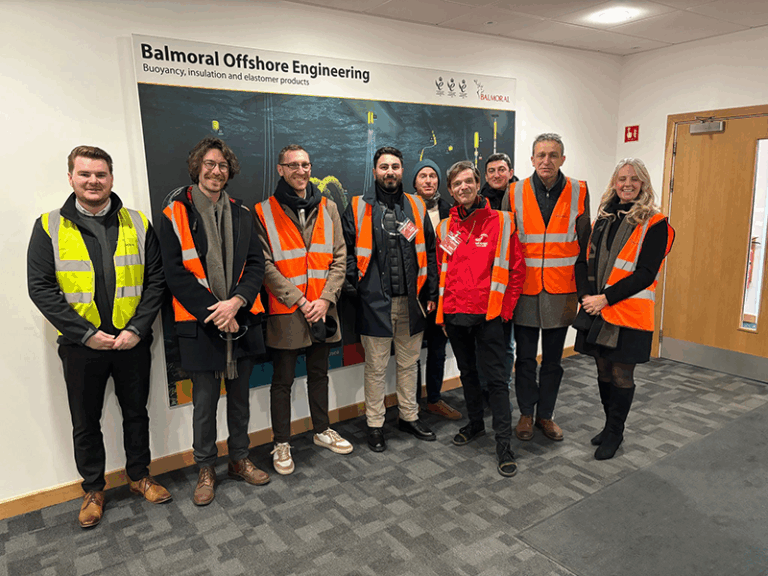
WEAMEC played a crucial role in strengthening international ties, particularly with Scottish partners, thanks to the support of Scottish Development International. These exchanges showcased regional expertise and encouraged stakeholders to collaborate at Seanergy, thereby strengthening international partnerships.
Finally, the round table organized by SDI, in which WEAMEC participated, on mooring and anchoring systems highlighted the challenges of standardization and opportunities for innovation to improve reliability and streamline costs. This discussion also highlighted the specific characteristics of floating wind power in this area compared to the oil and gas industries, particularly in terms of the size of the installations and their stresses in the marine environment.
In conclusion
FOWT 2024 emphasized that, despite the challenges, an exclusive focus on cost reduction could compromise the long-term development of the sector. Sustained investment in R&D is crucial to improving the reliability of technologies and, consequently, to reducing operational and investment costs in the long term, thereby contributing to a robust and sustainable floating wind energy sector, which is essential for meeting carbon neutrality targets.