Coordinateurs du projet
Context
Around the world, floating wind turbine and aquaculture projects are being developed at the prototype, pilot farm, and commercial farm scales. One of their key components is the mooring system. However, within weeks or months of being submerged, marine structures become colonized by various marine species. Science is therefore faced with the challenge of modeling a complex problem and has made significant progress in recent years in identifying probabilistic growth models and realistic geometries based on in situ measurements. These new data call previous practices into question. In particular, it has been shown that, over transitional periods, the underlying calculation assumptions do not always place the calculation within the safety domain. The ALGA_FOWT project focuses on a still little-known issue: the presence of algae in terms of both economic value and hydrodynamic impact.
Scientific breakthroughs and innovation
Numerous projects have been carried out in recent years on biofouling. These cover a wide range of topics, including antifouling coatings (ECOPAINT-PACA, PAINTS), protocols for measuring biocolonization (ABIOP, ABIOP+), growth modeling (COSELMAR), hydrodynamic effects on umbilicals (OMDYN2) or anchors (MHM-EMR, I2FLOW), calculations of jacket structures (SURFFEOL), thermal effects (OMDYN2, BIODYTHERM, ABIOP+), and modeling of colonization profiles (BLUEGIFT, BIODHYL). In addition, since the 1970s and the work of Sarpkaya, around twenty publications measuring Morison coefficients based on measurements of forces on colonized pipes have been identified.
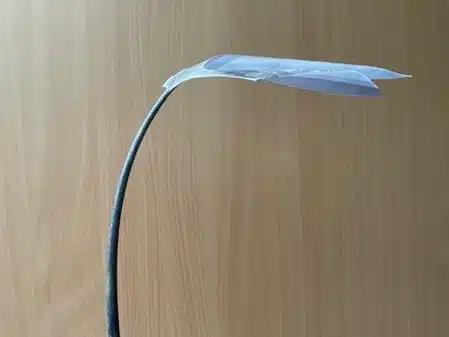
Based on this review of the state of the art, and focusing on the calculation of hydrodynamic forces, very little research has been conducted on algae. Only Theophanatos (1988) has carried out exploratory work. However, the precise geometry of algae, their rigidity, and their characteristics (buoyancy, etc.) are not mentioned, making this work very difficult to exploit and impossible to reproduce. The main reason for the lack of studies on this subject is certainly the difficulty of keeping flexible species alive in order to preserve their mechanical and hydrodynamic properties. A new model material available at Nantes University since 2022 has made it possible to overcome this difficulty. We believe that the flag effect of these algae must now be studied, as it is likely to generate significant cyclic stresses and therefore damage the anchors.
As for the second part of the project, the economic value of the algae collected, no studies have been conducted. Only the work of Buck (2017, 2018a, 2018b), which is purely descriptive, has provided some initial ideas. We would like to incorporate real value creation through identified sectors and economic analysis.
Expected technical and economic impact
The objective is to develop a comprehensive approach to algae mechanics that can be used to model the forces exerted by large algae (Laminaria). Found particularly in the Pays de la Loire region, these algae exert cyclical forces that damage the anchors of floating wind turbines. It is important to have a precise understanding of these forces in order to (1) collect algae and (2) update digital twins based on underwater inspections. We want to make these methods available to laboratories and companies in the region: floating electrical substations at Atlantic shipyards, MAREAL floats, INNOSEA engineering.
The performance indicators are:
- Characterization of algae and parameterization of their properties
- A database of forces to be integrated into floating wind turbine calculation software
- A highly original database made freely available at the end of the thesis.
- The organization of a special session during the French American Innovation Days 2025 (Boston) and Oceanext 2024 (Nantes).
Demonstrator
A demonstrator is available for viewing upon request at the UN@SEA 2 and 3 offshore platforms at Nantes University (IUML) in Nantes, as well as at the UN@PORT 1 test site in La Turballe.
Perspectives
European Doctoral Network project.
Industrial benefits
There are two types of benefits:
ALGA_FOWT focuses on assessing the impact of bio-colonization on the hydrodynamic forces exerted on the mooring lines of floating wind turbines.
This objective is perfectly in line with the current evolving needs of the major players in this industry. Future feedback from the first floating wind farms could call into question the tools and methods traditionally used for the design of floating wind turbines and the calculation of OPEX costs. Upstream studies such as the one proposed in the ALGA_FOWT project enable us to stay ahead of the state of the art. INNOSEA is therefore particularly interested in monitoring the progress of the work carried out during the project.