Coordinateurs du projet
Context
Ces dernières décennies ont été marquées par la baisse du coût actualisé de l’énergie (LCOE) produite à partir de l’éolien. Cette baisse est majoritairement due à la réduction du coût de fabrication des turbines éoliennes. Cependant, pour asseoir cette tendance à la baisse du LCOE, les contraintes liées à l’entretien des turbines éoliennes installées, actuellement ou ultérieurement, doivent être également maîtrisées afin de réduire les coûts d’exploitation, notamment pour l’éolien offshore où les coûts de maintenance sont nettement supérieurs à ceux engagés dans le cadre des opérations sur le marché onshore.
Pour réduite ces coûts de maintenance, le contrôle santé structurel intégré, ou Structural Health Monitoring (SHM) est l’une des voies explorées. En effet, son but est de remplacer la maintenance dite « classique », qui peut être périodique ou systématique, par une maintenance dite « conditionnelle » ou « prédictive », plus efficace et moins coûteuse. Cette nouvelle approche nécessite d’intégrer, à la structure à contrôler, des dispositifs d’instrumentation permettant de suivre son état de santé et de pouvoir détecter à tout moment l’apparition d’endommagements.
The objective of the RIVERS project is to study the feasibility of a solution for monitoring the health of the composite structure of a large offshore wind turbine blade, based on the Digital Image Correlation (DIC) technique. More specifically, RIVERS will work on i) developing an optical measurement system designed to be permanently integrated into the blade and ii) developing an image processing algorithm to detect the appearance of defects.
The RIVERS project is funded by Nantes Métropole as part of the WEAMEC “Small Equipment” call for projects.
Scientific breakthroughs and innovation
- Development of a monitoring solution based on D.I.C. technology.
- Development of a robotic camera positioning structure.
- Automatic generation of alert messages.
Expected technical and economic impact
The results of the project should enable manufacturers to optimize and thereby reduce the costs of their maintenance operations by relying on alerts received rather than periodic preventive maintenance. The technology developed should be usable in other industrial sectors.
Demonstrator
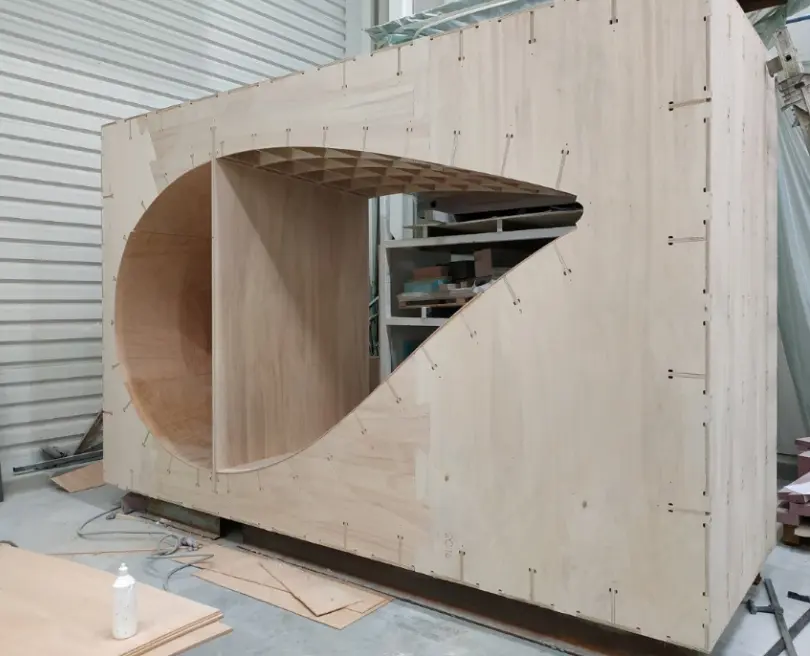
The monitoring solution developed as part of the project will be evaluated during tests planned on an actual blade.
Perspectives
The skills acquired during this project will enable IRT Jules Verne to offer comprehensive SHM solutions to other industrial sectors by adapting this solution to other specific contexts and needs.
Industrial benefits
By continuously monitoring wind turbine blades over an extended period, manufacturers will be able to assess actual maintenance needs and decide whether to expand preventive maintenance operations or eliminate them with a view to tailored planning and cost control, thereby reducing operating costs.