Coordinateurs du projet

Context
In recent years, marine environmental monitoring programs have been established to assess the impact of marine renewable energy structures such as offshore wind projects and to optimize their design.
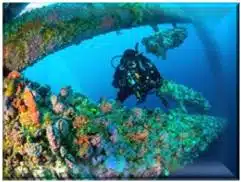
The requirements for environmental measurements relating to marine renewable energy infrastructure (accuracy and stability over time) are still at an early stage, where materials and structures researchers need to work more closely with metrology scientists to measure the impact of technologies on the environment and to assess the impact of the marine environment on technologies (corrosion, biofouling, etc.).
Scientific breakthroughs and innovation
Models of degradation in offshore energy systems are sensitive to the quality of input data.
Consequently, the marine renewable energy industry requires robust measurement protocols and quantification of uncertainties to better predict the aging of offshore structures. Key parameters such as temperature, salinity, and chlorophyll a are among the important environmental variables used to assess the phenomenon of biofouling on offshore structures. However, measurements of these parameters encounter problems related to data consistency and long-term comparability. Currently, EMPIR project submissions have identified that efforts are needed to ensure complete metrological consistency of measurements, harmonize measurement procedures and instrument calibration methodologies, and provide well-characterized reference materials.
This project aims to develop traceable and validated methods for measuring trends in data
on seawater parameters such as salinity, temperature, conductivity, pH, dissolved oxygen, and chlorophyll a, as well as measurement protocols with uncertainties lower than the natural variation of the parameters. The project will create and validate new reference documents for measuring the physicochemical parameters of seawater. A protocol for the calibration and routine control of field sensors for the variable will also be established and tested. In addition, reference standards for in situ measurements of chlorophyll a will be defined and tested. The traceability of parameter records will enable the combination of databases from different users, which is currently hampered by the use of non-harmonized calibration practices.
Expected technical and economic impact
Models of degradation in offshore energy systems, based on in situ data acquisition, are being developed to predict, optimize, and thereby reduce maintenance costs (corrosion, diffusion mechanisms, biofouling).